For shippers
Updated September 27, 2026
Finished vehicle logistics is the work of moving completed vehicles from the assembly plant to the place they are sold. That trip can run through an ocean port, a rail yard, or a processing center before a truck makes the final delivery to the dealer.
Car haulers handle that truck leg. They pick up at the plant, port, or railhead and deliver each vehicle in the same shape it left.
This guide walks the chain one step at a time and shows where each handoff happens. We have hauled finished vehicles since 1999, so it is written from the truck, not a conference stage.
The Journey From Plant to Dealer
Every new vehicle makes the same basic trip. The route changes by make, model, and market, but the steps look like this.
- The plant releases the vehicleA finished vehicle rolls off the line and waits in the plant’s yard for its ride out.
- A long move by rail or shipVehicles headed far away often travel by train to a rail yard near the market. Imports arrive by ship at an ocean port.
- Processing, if neededSome vehicles stop at a port facility or a vehicle preparation center to get prepped before they go to a dealer.
- The truck legA car hauler loads the vehicles at the plant, port, rail yard, or processing center and drives them to the dealer.
- Delivery and sign-offThe dealer checks each vehicle and signs for it. That record closes the load.
Not every vehicle takes every step. A dealer close to the plant may get its vehicles straight off the plant yard by truck. A dealer across the country may get them off a train first.
Who Does Each Step
Finished vehicle logistics works like a relay. Each handoff has an owner.
- The automaker builds the vehicle and decides where it goes.
- Railroads carry long moves between plants, ports, and rail yards.
- Ports and processors unload ships, hold vehicles, and prep them when needed.
- Car carriers like Accelerated haul vehicles by truck to dealers, rental lots, and auctions.
- The dealer checks each vehicle in and signs for it.
Each handoff changes who is holding the vehicle, so each one gets a record. That is why the paperwork matters as much as the driving.
Where Car Haulers Fit
Trains and ships cover long distances. They cannot pull up to a dealership. The truck is the step that reaches the dealer lot, so the last leg is a job for a car hauler.
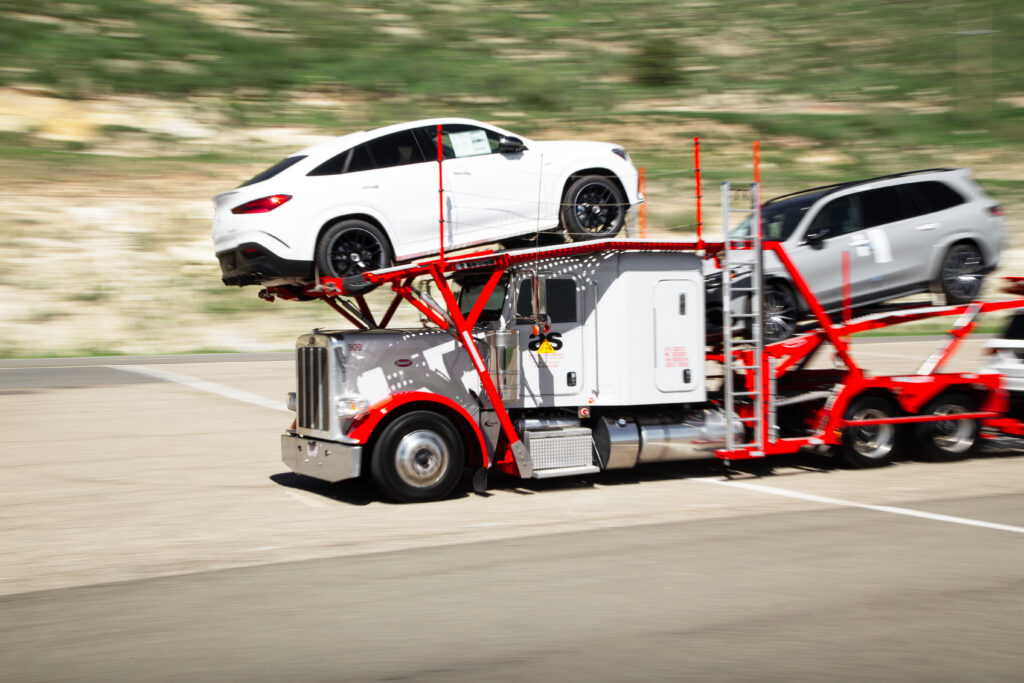
A commercial car hauler is a tractor and trailer built to carry vehicles on two levels. Our rigs carry up to nine cars. Most have a truck package, so they carry vehicles on the tractor as well as the trailer.
At Accelerated, our freight comes from every part of the chain:
- Plant freight: new vehicles leaving automaker assembly plants
- Port freight: imported vehicles leaving ocean ports
- Rail freight: vehicles coming off rail ramps
- Rental fleets: cars moving between rental locations
- Secondary market: used vehicles for dealers and auctions
Our national clients include Mercedes-Benz USA, Toyota, Ford, General Motors USA, and Stellantis. See OEM vehicle transport for how we work with automakers.

Ports and Imported Vehicles
Imported vehicles come in by ship. At the port they roll off the vessel, wait in a staging area, and may be processed before they head inland.
Two of our operations show how this works:
- Baltimore, Maryland. We haul finished and processed vehicles from the Port of Baltimore and the Mercedes-Benz vehicle preparation center inland to dealers and rail.
- Jacksonville, Florida. We haul imported and processed vehicles out of JAXPORT, a major Southeast vehicle-handling hub, inland to dealers and rail.
Notice the words “and rail.” A port is not always the last handoff before the dealer. Some vehicles leave the port by truck and then board a train for the long haul.
Rail and the Final Mile
Rail can carry vehicles most of the way across the country. The train stops at a rail yard, often called a railhead or rail ramp, where vehicles are unloaded. From there, car haulers take them the rest of the way to dealers in the region.
Our Denver-area operation is an example. From our yard in nearby Parker, Colorado, we run rail-head and regional freight across the Rocky Mountain region.
Plants work the same way. In Vance, Alabama, we haul new vehicles from the Mercedes-Benz U.S. assembly plant.
Vehicle Preparation Centers
A vehicle preparation center, or VPC, is a site near a port or plant where vehicles get prepped before they go to a dealer. For a shipper, it is one more pickup point in the chain. Our Baltimore operation hauls from the Mercedes-Benz VPC there.
Moving vehicles from a plant, port, or rail yard? Talk to our team about your freight.
Beyond New Cars: Rental Fleets, Dealers, and Auctions
Finished vehicles keep moving after the first sale. The same trucks that serve plants and ports also move vehicles that are already in use.
Rental fleets
Rental companies move their fleets between locations for many reasons. We work with Hertz, Enterprise, and Avis at locations around the U.S. See rental fleet transport.
Dealers and auctions
We haul vehicles from auctions around the country to dealerships. We also move groups of vehicles for fleet departments, deliver direct to out-of-state customers, and handle dealer trades. See dealer and auction transport.
Own trucks and partners
We run our own fleet and a brokerage department. When volume peaks, we can also draw on a large pool of pre-screened auto transport partners.
What Shippers Should Ask a Carrier
Before you hand a carrier your vehicles, ask these questions. Here is how we answer each one.
| Ask this | Our answer |
|---|---|
| Can I see where my vehicles are? | Every one of our trucks has GPS tracking. |
| How will I know a load was delivered? | Every truck carries Electronic Proof of Delivery. Dealers can sign up for automated ePODs and live tracking on our ePOD page. |
| Who manages my origin? | Each OEM origin has its own dedicated management team. |
| Who plans the loads? | Our dispatch team has over 100 years of combined auto transport experience. |
| Your trucks or a broker’s? | Both are possible. We run our own fleet and a brokerage department. Ask which one will carry your load. |
| How long have you done this? | We have been moving cars since 1999. |
Also ask how the carrier records each vehicle’s condition at pickup and delivery. Our guide to vehicle condition reports and bills of lading covers what those papers show and what to check before you sign.
Finished Vehicle Logistics FAQs
What is finished vehicle logistics?
It is the planning and transport that moves completed vehicles from the assembly plant to the point of sale. The trip can include rail, ships, ports, and processing centers, and it usually ends with a car hauler delivering to the dealer.
How is it different from automotive logistics?
Automotive logistics is the wider field. It also covers moving parts into plants. Finished vehicle logistics covers only the outbound side: completed vehicles on their way to be sold.
How are new cars shipped to dealers?
The last leg to the dealer is by truck. Vehicles going far may first ride a train to a rail yard or a ship to a port. A car hauler then picks them up there and delivers them to the dealer.
Does Accelerated move used vehicles too?
Yes. We move new and used vehicles for manufacturers, dealers, fleet companies, and auto auctions.
How do I start shipping with Accelerated?
Call us at (720) 200-3100 or send a message through our contact page. Tell us where your vehicles start, where they need to go, and how many you move.
Move Your Vehicles With Accelerated
Plant, port, rail, rental, or auction freight: we have hauled finished vehicles since 1999, with GPS tracking and Electronic Proof of Delivery on every truck. See our auto transport services, or reach our team now.
Prefer the phone? Call (720) 200-3100, Monday to Friday 7:00 AM to 5:00 PM and Saturday 8:00 AM to 12:00 PM.