
The driving career
Updated September 28, 2026
A truck driver moves freight safely and on time. Federal rules turn much of the job into set duties: check the truck before driving, check the load early in the trip and again along the way, keep hours and logs, report defects at the end of the day, and handle inspections and tests.
This page ties each duty to the rule behind it, then shows what a car hauler adds and gives you a sample job description to copy.
This guide comes from a car-haul carrier that contracts with drivers. It is for anyone deciding whether to drive, and for small carriers writing a job posting.
Duties Federal Rules Require
These duties apply to every driver of a commercial truck in interstate commerce. Each one names its rule.
Before driving
Check the truck
Be satisfied the truck is in safe operating condition. Review the last vehicle inspection report if it listed defects, and sign it to show the repairs were certified.
49 CFR 396.13
First 50 miles
Check the load
Make sure the cargo is secured before you drive. Inspect it and its tiedowns within the first 50 miles, then again at each duty change, or every 3 hours or 150 miles, whichever comes first.
49 CFR 392.9
All day
Keep hours and logs
After 10 hours off duty, drive no more than 11 hours, and not after the 14th hour on duty. Record your duty status every day, usually on an electronic logging device.
49 CFR 395.3, 395.8
On the road
Handle inspections
FMCSA agents may inspect the truck on the road. If you get an inspection report, deliver a copy to your carrier. A truck marked out of service stays parked until it is repaired.
49 CFR 396.9
End of day
Report defects
Write a report on each truck you drove if you found or were told of a defect. It covers brakes, steering, lights, tires, mirrors, coupling devices, wheels and more, and you sign it.
49 CFR 396.11
Any time
Take drug and alcohol tests
Pass a drug test before you first drive for a carrier, and take random drug and alcohol tests when you are selected.
49 CFR 382.301, 382.305
For the detail behind each duty, see our guides to the pre-trip inspection, hours of service, ELD rules, DOT inspection levels and drug and alcohol testing.
A Typical Day for a Truck Driver
Days change with the freight, but the duties above give most of them the same shape:
- StartCome on duty after at least 10 hours off. Check the truck and read the last inspection report.
- Pick upRead the bill of lading, couple the trailer or load the freight, and secure it.
- DriveCheck the load within 50 miles, then at each duty change, or every 3 hours or 150 miles.
- DeliverUnload or drop the trailer, and get the receiver’s signature or an electronic proof of delivery.
- Close outLog your hours, and write up any defect you found on the truck.
OTR drivers repeat this across many states and sleep on the road. See what OTR trucking is for how it compares with regional and local work.
Truck Driver Skills and Requirements
To drive across state lines you must be at least 21, read and speak English well enough for the job, be physically qualified, hold one valid commercial license and not be disqualified. A tractor-trailer takes a Class A CDL. Our guide on how to become a truck driver walks through each step.
The Bureau of Labor Statistics names four qualities the job depends on:
- Hand-eye coordination to use your hands, feet and eyes together and react safely.
- Hearing good enough to hear a forced whisper in one ear at 5 feet, with or without a hearing aid.
- Physical health, because federal rules keep people with some medical conditions, such as epilepsy, from driving a truck.
- Vision of at least 20/40 in each eye, a 70-degree field of vision, and the ability to tell traffic light colors apart.
The Department of Labor’s O*NET list of tasks adds hands-on work: reading bills of lading, coupling and uncoupling trailers, backing into loading spots, and reporting defects, accidents or damage.
What a Car Hauler Adds to the Job
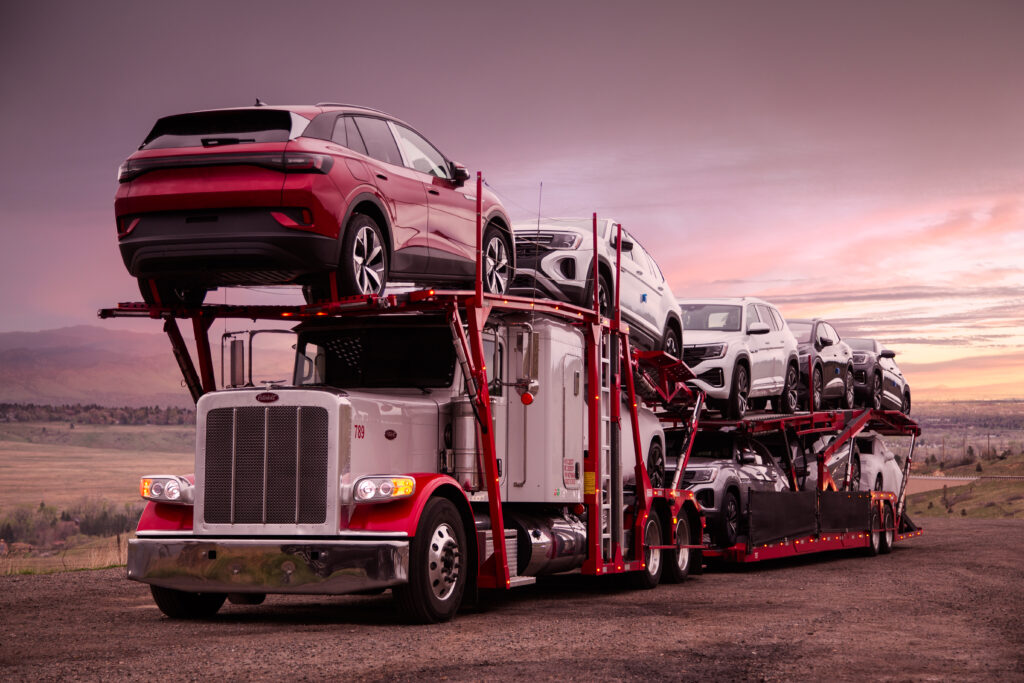
A car hauler does every duty above, plus work that box freight never asks for. The cargo is the customer’s new or used vehicles, so the loading and the paperwork carry more weight.
- Load in order. Load each car onto the trailer, and on most of our rigs onto the truck package over the tractor. Our rigs carry up to nine cars.
- Secure every car. A car or light truck of 10,000 pounds or less must be held at the front and rear with at least two tiedowns. See our cargo securement guide.
- Record each car’s condition. On loads Accelerated gives to sub-haulers, our terms require a condition report and a bill of lading for each vehicle, signed by the customer. Our guide to vehicle condition reports explains them.
- Coordinate each stop. Our sub-hauler terms also have the driver contact the pickup and delivery parties to set up each stop.
- Close out electronically. Every Accelerated load runs with GPS tracking and Electronic Proof of Delivery.
See our guide on how to become a car hauler for the path into this work.
Already hauling cars on a 9-car rig? The application takes a few minutes from your phone.
Sample Truck Driver Job Description
Small carriers can copy this sample and adjust it. It lists duties and requirements only. Add your own pay terms and check every line against your operation.
CDL-A Truck Driver
Summary: Drive a tractor-trailer to move freight safely and on time, and meet every federal safety rule for commercial drivers.
Duties
- Inspect the truck before each trip and review the last inspection report.
- Load or couple the freight, and secure it before driving.
- Check the cargo within the first 50 miles, and again every 3 hours or 150 miles.
- Follow hours-of-service limits and record duty status on an ELD.
- Report vehicle defects at the end of each day, in writing.
- Handle bills of lading and delivery signatures.
- Take part in roadside inspections and drug and alcohol testing.
Requirements
- Valid Class A CDL.
- At least 21 years old for interstate driving.
- Current DOT medical certificate.
- Able to read and speak English well enough for the job.
- Pass a pre-employment drug test and a road test.
No pay line is included, on purpose. Each carrier sets its own terms.
Truck Driver Job Description FAQs
What does a truck driver do?
A truck driver moves freight from one place to another. The job includes checking the truck, securing and checking the load, keeping hours and logs, delivering the freight and reporting defects.
What are the main duties of a truck driver?
Check the truck before driving, check the load within the first 50 miles and along the way, follow hours-of-service limits, record duty status, report defects in writing, and take part in inspections and drug and alcohol tests.
What skills does a truck driver need?
The Bureau of Labor Statistics names hand-eye coordination, hearing, physical health and vision. Hands-on skills include coupling trailers, backing into loading spots and reading bills of lading.
What does an OTR truck driver do?
The same duties, over long distances. An OTR driver takes freight wherever it goes, often across many states, and is often away from home for days or weeks at a time.
What does a car hauler do?
A car hauler does every truck driver duty, plus loading vehicles in order, securing each one front and rear, recording each car’s condition and closing out the delivery.
Haul Cars With Accelerated
We run OEM plant, port and rail freight with contract drivers, on rigs that carry up to nine cars. With 3 years of CDL-A driving and 1 year of verifiable 9-car experience, apply today.
Want to see the rigs first? See the trucks you would run.
Sources
Last checked September 28, 2026. Car-haul terms, freight and equipment are from our careers, equipment and load request pages on that date.
- 49 CFR 396.13, driver inspection
- 49 CFR 392.9, inspection of cargo
- 49 CFR 395.3, maximum driving time
- 49 CFR 395.8, record of duty status
- 49 CFR 396.9, inspection of vehicles in operation
- 49 CFR 396.11, driver vehicle inspection report
- 49 CFR 382.301, pre-employment testing
- 49 CFR 382.305, random testing
- 49 CFR 391.11, driver qualifications
- 49 CFR 393.128, securing automobiles
- Bureau of Labor Statistics, heavy and tractor-trailer truck drivers
- O*NET, heavy and tractor-trailer truck drivers (53-3032.00)
- Accelerated, car hauler jobs and requirements
- Accelerated, load request and sub-hauler terms