Trucking rules, explained
Updated September 28, 2026
CDL stands for commercial driver’s license. It is the license federal law requires to drive a commercial motor vehicle: a truck or combination rated 26,001 pounds or more, a vehicle built for 16 or more people, or one hauling hazardous materials that need placards.
Your home state issues the CDL, under minimum standards set in federal rules.
This guide explains what a CDL is, what is printed on one, who needs it and how it differs from the license in your wallet now. Each part links to a deeper guide when you are ready for the next step.
What CDL Stands For
CDL is short for commercial driver’s license. The federal rules in 49 CFR 383.5 define it this way:
Commercial driver’s license (CDL)
A license issued to an individual by a State or other jurisdiction of domicile, in accordance with the standards contained in this part, which authorizes the individual to operate a class of a commercial motor vehicle.
In plain words: your home state issues it, it follows federal standards, and it lets you drive a certain class of big vehicle. FMCSA, the federal agency that writes the standards, does not issue CDLs itself. As its CDL page says, “State governments are responsible for issuing CDLs.”
You also give up your regular license when you get one. Federal rules let a commercial driver hold only one driver’s license at a time, and a new CDL applicant must surrender any other license to the state.
What a CDL Shows
Federal rules list what every CDL must show. Three parts tell you what the holder may drive: the class, the endorsements and the restrictions.
Commercial Driver’s License
Sample State
ClassA
EndN T
RestrE
Illustration only. Not a real license.
- The words “Commercial Driver’s License” or “CDL.” Every CDL must say so, clearly.
- Class A, B or C. The group of vehicles you may drive.
- Endorsements. Letters for the extra vehicles you passed tests for. Here, N is tank vehicles and T is double or triple trailers.
- Restrictions. Letters for what you may not drive. Here, E means no manual transmission.
A CDL also shows your name, address, date of birth, photo, license number, the issuing state and the dates it was issued and expires.
Who Needs a CDL
The CDL rules in 49 CFR part 383 apply to anyone who drives a commercial motor vehicle, in interstate or intrastate commerce. For CDL purposes, that means a vehicle in one of three groups: a combination rated 26,001 pounds or more towing a unit rated over 10,000 pounds, a single vehicle rated 26,001 pounds or more, or a smaller vehicle built for 16 or more people or hauling placarded hazmat.
A few drivers are exempt. States must exempt military drivers, and they may exempt some farmers, firefighters and snowplow drivers. For the weight lines in detail, see our guide to what counts as a commercial motor vehicle.
The Three Classes
A
Combination vehicles. Tractor-trailers and other rigs rated 26,001 lb or more, towing a unit rated over 10,000 lb.
B
Heavy straight vehicles. One vehicle rated 26,001 lb or more, like a straight truck or a large bus.
C
Small vehicles. Not A or B, but built for 16 or more people or hauling placarded hazmat.
A Class A holder may also drive Class B and C vehicles, with the right endorsements. Our guide to Class A vs Class B CDL covers the differences and the tests.
Endorsements and Restrictions
An endorsement adds a vehicle type to your CDL, and each one takes its own test. The federal letters are:
- T Double or triple trailers
- P Passenger vehicles
- N Tank vehicles
- H Hazardous materials
- X Tank and hazmat combined
- S School buses
A restriction does the opposite. It limits what you may drive, often because of the vehicle you tested in. Test in a truck without air brakes, for example, and your CDL gets an L restriction: no air brakes. Our guide to CDL endorsements explains each one and what it takes.
CDL vs a Regular Driver’s License
FMCSA says driving a commercial motor vehicle takes more knowledge, experience, skills and physical ability than driving a car. The CDL reflects that:
- Harder tests. You pass knowledge and skills tests that meet federal standards, in the class of vehicle you will drive.
- A medical card. A driver who certifies non-excepted interstate driving must carry a DOT medical examiner’s certificate. See our guide to the DOT physical.
- A higher standard in any vehicle. In FMCSA’s words, CDL holders “are held to a higher standard when operating any type of motor vehicle on public roads.” Our guide to CDL disqualifications lists the offenses and penalties.
Why the CDL Exists
The federal CDL program traces back to the Commercial Motor Vehicle Safety Act of 1986, a law enacted on October 27, 1986. Today the law sits in 49 U.S.C. chapter 313, which says a commercial driver “may have only one driver’s license at any time.”
The rules in part 383 state their purpose plainly: to help reduce or prevent truck and bus crashes, deaths and injuries by requiring a single commercial license and by disqualifying drivers who drive commercial vehicles unsafely.
What Car Haulers Need
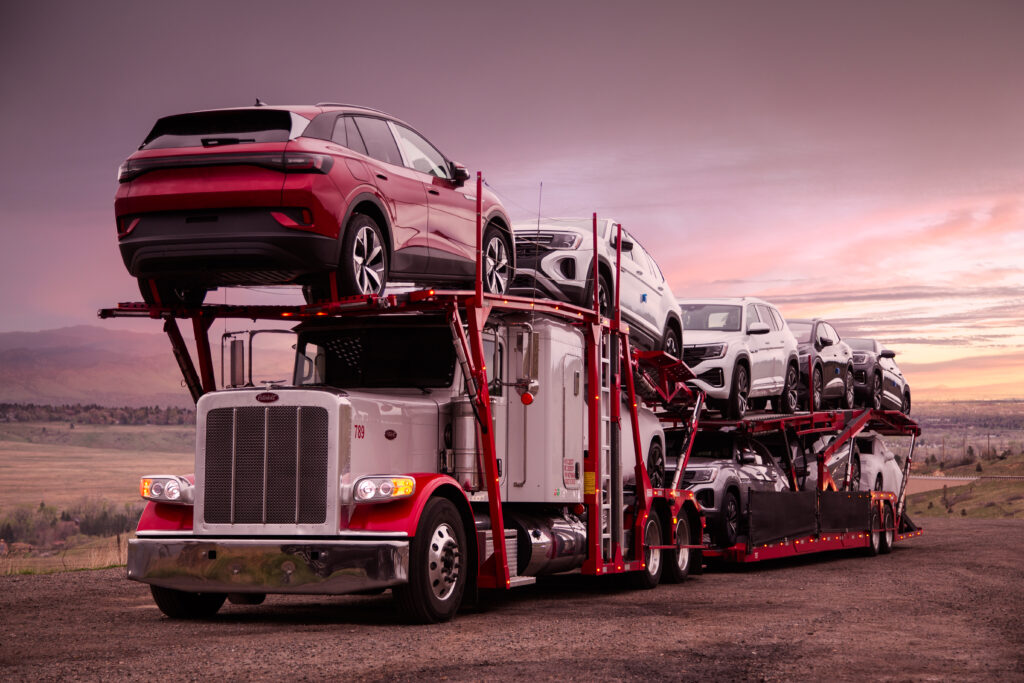
A car hauler is a tractor pulling a loaded trailer, which makes it a Class A combination. At Accelerated, our contract drivers need more than the license: 3 years of CDL-A driving and 1 year of verifiable 9-car experience, plus an acceptable MVR, a clean safety history and a current DOT medical certificate.
New to trucking? Car hauling is a specialty, so newer drivers build Class A miles with other freight first. Start with our guides to how long it takes to get a CDL and the CDL permit test, and our no-experience FAQ for the honest path into car hauling.
Already have your Class A and years of car-haul miles? Contract with Accelerated.
What Is a CDL? FAQs
What does CDL stand for?
Commercial driver’s license. It is the license you need to drive a commercial motor vehicle, such as a tractor-trailer, a heavy straight truck, a large bus or a vehicle hauling placarded hazmat.
Is a CDL a federal license?
No. Your home state issues it. Federal rules set the minimum standards every state must follow, and FMCSA says it does not issue CDLs itself.
Can you have a CDL and a regular driver’s license?
No. Federal rules let a commercial driver hold only one driver’s license at a time, and a new CDL applicant must surrender any other license to the state.
What is the difference between a CDL and a regular license?
A CDL takes harder knowledge and skills tests in the class of vehicle you will drive, and drivers who certify non-excepted interstate driving must carry a DOT medical certificate. CDL holders are also held to a higher standard, and serious violations in any vehicle can cost them the CDL.
What CDL do you need to be a truck driver?
It depends on the truck. A tractor-trailer takes a Class A, and a heavy straight truck takes at least a Class B. Hauling cars takes a Class A, and Accelerated also asks for 3 years of CDL-A driving and 1 year of verifiable 9-car experience.
Ready to Put Your CDL to Work Hauling Cars?
If you have 3 years of CDL-A driving and 1 year of verifiable 9-car experience, Accelerated wants to talk. Contract drivers get a $5,000 sign-on bonus, paid within your first month of activation.
Sources
Last checked September 28, 2026. States can add their own rules, so check with your state’s licensing agency. This guide is a plain-language summary, not legal advice.
- 49 CFR 383.5, definitions: commercial driver’s license, commercial motor vehicle
- 49 CFR 383.1, purpose and scope of the CDL rules
- 49 CFR 383.3, who the CDL rules cover, and exemptions
- 49 CFR 383.21, number of drivers’ licenses
- 49 CFR 383.23, the CDL requirement and tests
- 49 CFR 383.71, CDL applications and self-certification
- 49 CFR 383.91, commercial motor vehicle groups
- 49 CFR 383.93, endorsements
- 49 CFR 383.153, what a CDL must show
- 49 U.S.C. 31302, one driver’s license (source: Pub. L. 99-570, October 27, 1986)
- FMCSA, Commercial Driver’s License Program