For future truck drivers
Updated September 28, 2026
There is no federal minimum number of weeks to get a CDL. The federal rules fix the order of the steps and one wait: you must hold your commercial learner’s permit (CLP) for 14 days before you can take the skills test.
Everything else depends on you, your school, and your state. The biggest variable is training. The federal rules set no minimum hours for it. You are done when your instructor signs off on each skill.
This guide walks through each step to a Class A CDL in order. It shows which parts run on a fixed clock and which parts vary, with the rule behind each one. It ends with where a new CDL holder stands with a car-haul carrier like Accelerated.
The Steps to a Class A CDL, in Order
A Class A CDL lets you drive a tractor and trailer, like a car hauler. Here is the path the federal rules lay out. Your state runs each test and may add steps of its own.
- Check that you qualify.You must be at least 18 to get a CLP. You need a regular driver’s license from your home state and proof of citizenship or lawful permanent residency.
- Get your DOT medical card.Fixed: up to 24 monthsIf you plan to drive across state lines, you tell your state so, and you need a medical examiner’s certificate. A certified medical examiner gives the exam. The card lasts up to 24 months.
- Pass the knowledge tests and get your CLP.Fixed: 80% to passThese are written or computer tests your state gives. You need at least 80% to pass each one. Then your state issues your commercial learner’s permit.
- Finish entry-level driver training.Varies: no minimum hoursFirst-time Class A drivers must train with a provider on FMCSA’s Training Provider Registry. Training covers theory and behind-the-wheel time on a range and on public roads.
- Wait out the 14 days.Fixed: 14 daysYou cannot take the skills test in the first 14 days after your CLP is first issued. You can train during this time.
- Pass the skills test.Varies: test datesIt has three parts, taken in this order: the pre-trip inspection, basic vehicle control, and the road test. Fail one part and the test stops there.
- Get your CDL.You turn in your CLP and your old license, and your state issues your CDL.
The Parts With a Fixed Clock
A few parts of the process run on dates set in the federal rules. These are the same in every state.
- The 14-day hold. No skills test in the first 14 days after your CLP is first issued. This is the one wait nobody can shorten.
- One year on your CLP. A CLP can be valid for no more than one year from the day it was first issued. After that, you retake the knowledge tests. Some states do not renew a CLP at all. In Colorado, for example, a CLP lasts one year and cannot be renewed.
- One year to finish training. Once you finish the first part of your training, you have one year to finish the rest (theory, range, and public road).
- Skills-test passes expire with your CLP. If you pass one part of the skills test and fail the next, the passed parts count only during your first CLP. Renew the CLP and you retake all three parts.
- Your medical card. It lasts up to 24 months. An examiner can certify you for less time to watch a health condition.
The Parts That Vary
Most of the calendar is set by things outside the federal rules. That is why answers online range so widely.
- How long training takes. The federal rules set no minimum hours for theory or behind-the-wheel training. Your instructor decides when you can do each skill. Schools set their own program length, so ask each school how long its program runs and why.
- Your state’s own training rules. A state can add to the federal rules. FMCSA says a state may require a set number of behind-the-wheel hours, for example.
- Getting your training on record. Your training provider must report that you finished by midnight of the second business day after you complete it. Your state cannot give you the test until that record is in.
- Test dates. Skills tests are booked through your state or a third-party tester it approves. How soon you can get a slot depends on where you live.
- Retests. A failed test adds time. Your state gives you a different version of the knowledge test when you retake it.
Our guide to entry-level driver training covers what the training includes and how to check that a school is on the registry.
Getting Your CDL Permit
Your CLP lets you practice in a truck on public roads before you have a CDL. It comes with rules:
- You must pass the general knowledge test for the class of truck you plan to drive. For a Class A permit, you also must pass the combination vehicles test. Fail it and your state cannot issue a Class A CLP.
- A CDL holder with the right class must ride in the front seat next to you at all times, watching and supervising.
- You must also hold a regular driver’s license from the same state.
- You cannot haul hazardous materials on a CLP.
- Only three endorsements are allowed on a CLP: passenger, school bus, and tank vehicle (empty tanks only).
Pass the air brake knowledge test too. If you fail it, your permit and license get an air brake restriction, and you cannot drive a truck with full air brakes.
Already have your CDL and some years behind the wheel? See what Accelerated asks of its contract drivers.
What It Costs
Your state sets its own license fees. Here is one example, from Florida’s fee schedule on September 28, 2026:
| Florida fee | Amount |
|---|---|
| Original or renewal commercial driver license | $75.00 |
| Each endorsement | $7.00 |
| Knowledge retest | $10.00 |
| Skills retest | $20.00 |
Florida says a $6.25 service fee may apply at a tax collector office. Other states charge different amounts, so check your state’s fee page.
Two costs have no set price. Training costs vary by school, so ask each one for its full price in writing before you sign. The DOT physical is priced by the examiner’s office. If you add a hazmat endorsement later, TSA charges its own fee for the background check. Our guide on how to get a hazmat endorsement has the current amount.
Age and Language Rules
- 18 for a CLP. That is the federal minimum for a learner’s permit.
- 21 to drive across state lines. Federal driver rules require you to be at least 21 to drive a commercial truck in interstate commerce.
- Under 21 is a state matter. Some states license drivers under 21 for driving inside the state only. In Florida, for example, applicants must be at least 18, and those under 21 are restricted to driving within Florida.
- English. Federal rules require drivers to read and speak English well enough to talk with the public, read road signs, answer officers, and fill out reports. The skills test is given in English. Knowledge tests may be offered in other languages, without an interpreter. Colorado, for example, gives its CDL knowledge test in English and Spanish.
Rules Vary by State
The federal rules are the floor. Your state adds its own steps, forms, and fees. Two examples:
- Colorado gives skills tests at approved third-party testers. It asks for proof you finished entry-level training when you get your CDL, and a ten-year driving history form.
- Florida requires proof of Florida residency and limits drivers under 21 to trips inside the state.
Before you start, read your state’s CDL manual and its CDL page. They list the exact tests, documents, and fees where you live.
After the CDL: Getting to Car Hauling
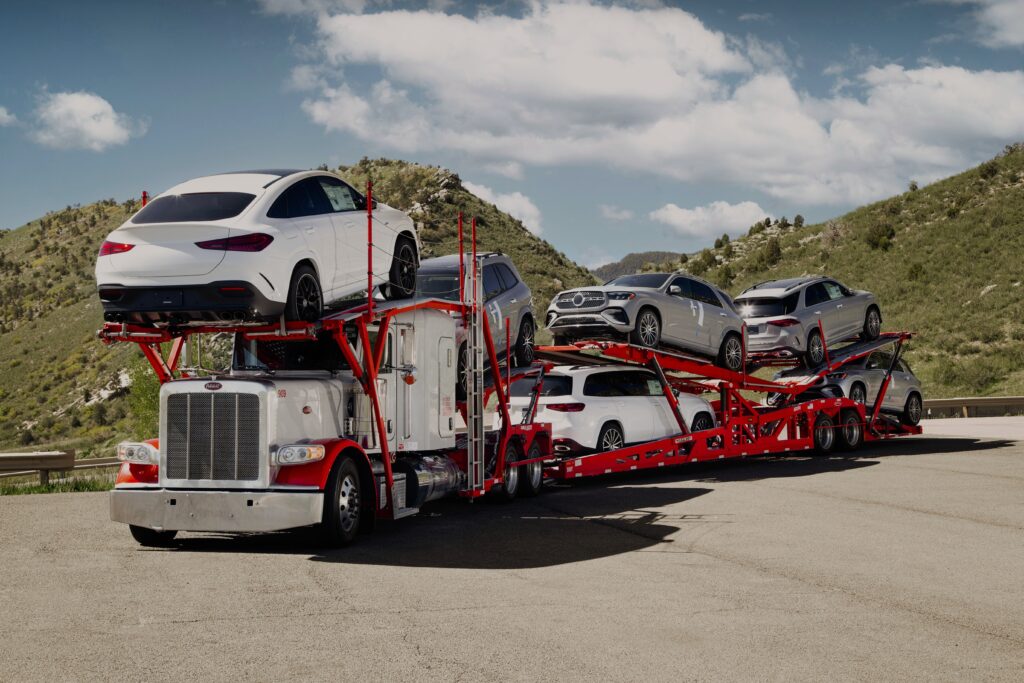
A new CDL opens the door to trucking. It is not enough to haul cars for us yet. Loading and securing up to nine vehicles is a specialty, so Accelerated asks every contract driver for:
Plus:
- A valid Class A CDL, an acceptable MVR, and a clean safety history
- A current DOT medical card, plus a DOT physical, drug screen, and background check
So the timeline to a car-haul job is years, not weeks. Most new drivers start with other freight and build their record, as our guide to becoming a truck driver shows step by step. Our no-experience FAQ lays out the honest path in.
CDL Timeline FAQs
How long does it take to get a CDL?
There is no federal minimum in weeks. The only fixed wait is the 14 days you must hold your CLP before the skills test. The rest depends on how fast you finish training, when your school reports it, and when your state can test you.
Can you get a CDL in two weeks?
The earliest you can take the skills test is 14 days after your CLP is first issued. You also must finish entry-level driver training first, and your state must have your training record before it tests you. Plan for your training time on top of the 14 days.
How long is a CDL permit good for?
No more than one year from the day it was first issued. After that, you retake the knowledge tests. Some states, like Colorado, do not renew a CLP at all.
Do I have to go to CDL school?
If you are getting a Class A or Class B CDL for the first time, you must finish entry-level driver training with a provider on FMCSA’s Training Provider Registry. Only listed providers count, so check the registry before you pay.
What is on the CDL skills test?
Three parts, in order: a pre-trip inspection, basic vehicle control (such as backing), and a road test. You take it in the kind of truck you plan to drive. If you test in a truck with an automatic transmission, your license gets a restriction against driving a manual.
See What It Takes to Haul Cars
Getting your CDL is step one. When you have 3 years of CDL-A driving and 1 year of verifiable 9-car experience, Accelerated wants to hear from you. See the full requirements on our careers page.
Sources
Last checked September 28, 2026. Rules and fees change. Check with your state’s licensing agency before you start. This guide is a plain-language summary, not legal advice.
- 49 CFR 383.25, commercial learner’s permit
- 49 CFR 383.71, driver application procedures
- 49 CFR 383.133, test methods
- 49 CFR 383.135, passing scores
- 49 CFR 380.603, who entry-level driver training covers
- 49 CFR 380.717, training certification
- 49 CFR 391.11, driver qualifications
- 49 CFR 391.45, medical exams
- FMCSA, CDL drivers page (classes, endorsements, restrictions)
- FMCSA Training Provider Registry, FAQs
- Florida HSMV, fee schedule
- Florida HSMV, commercial motor vehicle drivers
- Colorado DMV, CDL general information